


Thousands of anti-nuclear protesters shouted “I am Taiwanese, I am against nuclear power” yesterday as they marched through downtown Taipei to call for an end to nuclear power in Taiwan on the eve of the anniversary of President Ma Ying-jeou’s (馬英九) second inauguration.
“We are extremely disappointed that the government has no regard for the threat that nuclear power poses to human life,” said Kao Cheng-yan (高成炎), a former chairman of the Taiwan Environmental Protection Union, which organized the march. “We believe that there is only one Taiwan, that people’s lives are invaluable and that there are other viable energy resource options.”
The protesters also urged the government to revise the phrasing of the proposed national referendum to decide the fate of the Fourth Nuclear Power Plant in New Taipei City’s (新北市) Gongliao District (貢寮), to amend the Referendum Act (公民投票法) and to modify the Nuclear Reactor Facilities Regulation Act (核子反應器設施管制法) so residents living within 50km of a nuclear plant will have the right to decide whether it operates.
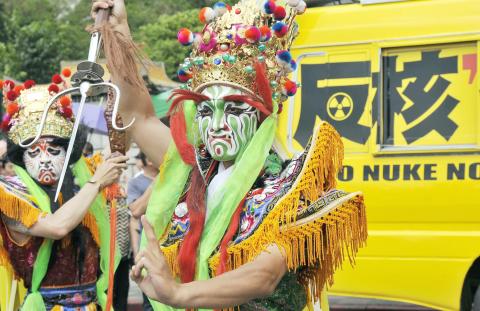
Photo: Edward Lau / Reuters
In contrast to the nationwide anti-nuclear protests held in March, which drew a large number of young people who expressed their stances in artistic ways and were altogether more festive, the participants of yesterday’s rally ere mostly middle-aged and elderly. Members of civic groups, the Democratic Progressive Party (DPP) and the Taiwan Solidarity Union (TSU) also took part in the protest.
“Time has proven me right,” said former premier Chang Chun-hsiung (張俊雄) of the DPP, referring to the decision he made in 2000 when he was premier to halt construction of the Fourth Nuclear Power Plant despite facing extreme pressure to finish the project.
Although the plant’s construction was eventually resumed, many people are now aware of the danger posed by nuclear energy since the Fukushima Dai-ichi nuclear power plant disaster in Japan two years ago, he said.
“Is it right to establish a plant that provides only 20 to 30 years of electricity for our generation, but leaves behind harmful radioactive waste that will affect our offspring and the environment for about 240,000 years?” he said.
Former vice president Annette Lu (呂秀蓮) added that it is wrong that the government has already spent more than NT$300 billion (US$10 billion) of taxpayers’ money on the plant and forces the public to live in permanent fear of a nuclear disaster.
Meanwhile, Yang Mu-huo (楊木火), secretary-general of the Yenliao Anti-Nuclear Self-Help Association, said that although the proposal to hold a local referendum in New Taipei City was rejected by the Cabinet’s Referendum Review Committee on Thursday, advocates of the local poll would continue to push forward.
Several booths were set up along the march route, including one by the TSU that gave participants the chance to throw sandals bearing slogans such as “Impeach Ma” or “Terminate nuclear power” at two cardboard mannequins labeled “Ma’s black-hearted Cabinet” and “Bandit Ma, get out.”
The marchers converged at Ketagalan Boulevard in front of the Presidential Office at about 5pm to hear a series of speeches. They were then treated to performances by musician Chu Yueh-hsin (朱約信) — better known as Joy Topper (豬頭皮) — and rock band The Chairman (董事長樂團) in the evening.
The Taiwan Environmental Protection Union said a few of its representatives were to head to the Legislative Yuan after the event to stage 24-hour hunger strike, after which they would begin to hold a relay sit-in protest of unlimited duration.
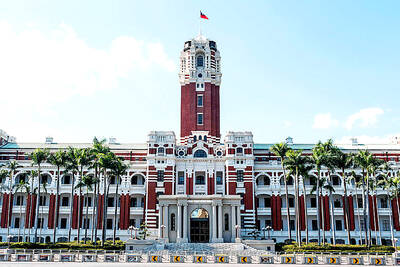
SECURITY: Taipei presses the US for arms supplies, saying the arms sales are not only a reflection of the US security commitment to Taiwan but also serve as a mutual deterrent against regional threats Taiwan is committed to preserving the cross-strait “status quo” and contributing to regional peace and stability, the Presidential Office said yesterday. “It is an undeniable fact that the Republic of China is a sovereign and independent democratic nation,” Presidential Office spokeswoman Karen Kuo (郭雅慧) reiterated, adding that Beijing has no right to claim sovereignty over Taiwan. The statements came after US President Donald Trump warned against Taiwanese independence. Trump wrapped up a state visit to Beijing on Friday, during which Chinese President Xi Jinping (習近平) had pressed him not to support Taiwan. Taiwan depends heavily on US security backing to deter China from carrying
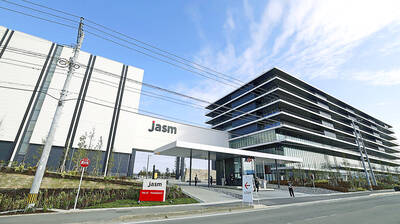
The subsidiary of Taiwan Semiconductor Manufacturing Co (TSMC, 台積電) in Kumamoto, Japan, turned a profit in the first quarter of this year, marking the first time the first fab of the unit has become profitable since mass production started at the end of 2024. According to the contract chipmaker’s financial statement released on Friday, Japan Advanced Semiconductor Manufacturing Inc (JASM), a joint venture running the fab in Kumamoto, posted NT$951 million (US$30.19 million) in profit in the January-to-March period, compared with a loss of NT$1.39 billion in the previous quarter, and a loss of NT$3.25 billion in the first quarter of

DRONE CENTRAL: Taiwan aims to become Asia’s democratic hub for drones, with most exports focused on high-quality military-grade models, an official said Taiwan’s drone industry is expected to expand significantly by 2030, producing 100,000 units per month and exporting half of them, the Ministry of Economic Affairs said yesterday. Current drone production capacity is about 15,000 units per month, but the industry can quickly scale up as demand increases, Industrial Development Administration Director-General Chiou Chyou-huey (邱求慧) told a news conference in Taipei. Taiwan’s drone output grew 2.5-fold last year to NT$12.9 billion (US$408.3 million) under a government program to develop the uncrewed vehicle sector, he said. The Executive Yuan in October last year approved plans to invest NT$44.2 billion into domestic production of uncrewed aerial
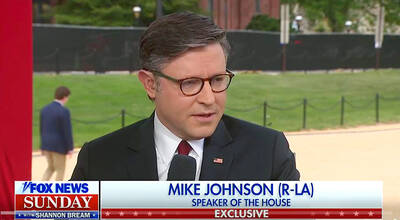
RESOLUTE BACKING: Two Republican senators are planning to introduce legislation that would impose immediate sanctions on China if it attempts to invade Taiwan US House of Representatives Speaker Mike Johnson on Sunday reaffirmed US congressional support for Taiwan, saying the US and “all freedom-loving people” have a stake in preventing China from seizing Taiwan by force. Johnson made the remarks in an interview with Fox News Sunday on US President Donald Trump’s summit with Chinese President Xi Jinping (習近平) last week. In an interview that aired on Friday on Fox News, just as Trump wrapped up a high-stakes visit to China, he said he has yet to green-light a new US$14 billion arms package to Taiwan and that it “depends on China.” “It’s a very good


 RSS
RSS